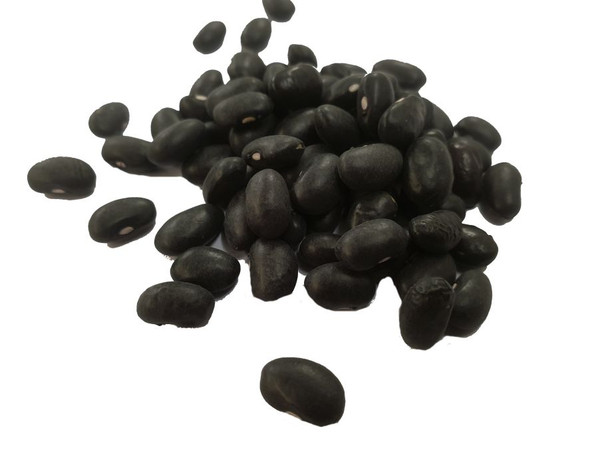


Description

The black turtle bean is hugely popular in Latin American cuisine, with its great taste and easy storage so it can used throughout the year it has spread all over the world to include Cajun and Creole cuisines of south Louisiana. Known in India as maa ki daal primarily in the Punjabi region
They are often called simply black beans - frijoles negros, zaragoza, judía negra, poroto negro, caraota o habichuela negra in Spanish, and feijão preto in Portuguese
The black turtle bean has a dense meaty texture which makes it popular in vegetarian dishes
It is a very popular bean in various regions of Brazil, and is used in the national dish, feijoada. It is also a main ingredient of Moros y Cristianos in Cuba
You will find this bean pops up in all manner of names throughout Latin American Cuisine in dishes ranging from soups broths, con carnes and way more for a good reason!
When the beans are hydrated you can keep the water left behind which takes on a black colour and use as the base for soups
Nutritional Info per 100G
Energy 1251kJ
Energy 299 kCal
Fat 0.90g
Saturates 0.10g
Monosaturated 0g
Polyunsaturated 0g
Carbohydrates 51.3g
Of which Sugars 2.1g
Fibre 15.5g
Protein 21.3g
Sodium 0.009g
Salt 0.02g
Packed in Unit that handles Sesame, Celery and Mustard
Black Turtle Beans Organic - Quick Reference
What is it?: Organic dried black turtle beans, a small black bean widely used in Latin American and Caribbean cooking.
Flavour: Earthy, savoury and mildly sweet with a creamy interior.
Common uses: Black bean chilli, rice and beans, soups, burritos, salads, dips and bean patties.
Pairs well with: Cumin, oregano, garlic, chilli, lime, coriander leaf and tomato.
How to use: Soak before cooking, then simmer in fresh water until fully tender.
Compare with: Kidney beans are larger and firmer; black turtle beans are smaller, creamier and more earthy.
Substitute: Kidney or pinto beans can be used in many savoury dishes.
Storage: Keep dry and airtight; refrigerate cooked beans and use promptly.
Good to know: Their dark skins can colour the cooking liquid, creating the characteristic deep appearance of black bean soups and stews.


