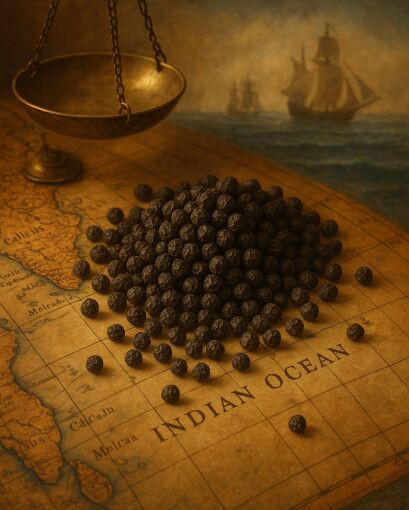
Before gold fever and silk routes, there was pepper. Long before European ships ventured into uncharted waters, black peppercorns travelled overland from India’s Malabar Coast, carried in silk sacks across deserts and mountains. Roman merchants once paid its weight in silver, calling it “black gold” — a treasure so precious it changed the shape of world trade.
The humble vine Piper nigrum thrives in the humid heat of southern India, where pepper has been cultivated for over 4,000 years. Ancient ports like Muziris bustled with spice traders from Arabia and Egypt, all seeking those tiny beads of pungent fire. By the time the medieval world stirred, pepper had become Europe’s most desired flavour — a mark of wealth, a symbol of civilisation, and often, a cause of conquest.
When Vasco da Gama reached Calicut in 1498, he wasn’t searching for new lands — he was following the scent of pepper. The spice that once travelled camelback now sailed by ship, forging the sea routes that would forever link East and West.
Black pepper remains the quiet ruler of the spice rack — not flamboyant, not rare, but eternal. Its story is the story of connection: of taste, trade, and the timeless human hunger for discovery.
Enjoy your Spice Trails this week, Steve and the Team