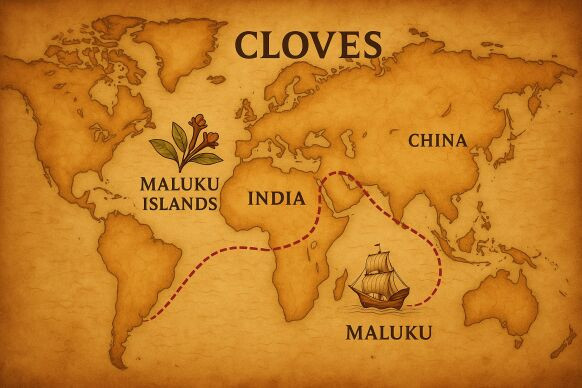
Cloves first appear in recorded history in the Han dynasty courts of China, around the 3rd century BCE. Courtiers were asked to chew them before addressing the emperor — a small detail that tells us just how precious and far-travelled these little spice buds already were. Considering they grow naturally only in the Maluku Islands of Indonesia, it means cloves had crossed thousands of miles before most people even knew such islands existed.
From those misty island groves, cloves travelled west on the monsoon winds. Malay sailors carried them to coastal India; Arab traders folded them into their spice networks; and by the early centuries of the Common Era, cloves had become familiar across ports stretching from Sri Lanka to the Red Sea. Each stop added a new layer of cultural meaning — healing, ritual, warmth, protection — woven into the spice’s identity.
Europe didn’t meet cloves properly until late antiquity, when they slipped into Roman and later medieval kitchens through the hands of Arab merchants. By then, they had spent over a millennium travelling through Asia, gathering stories, flavours, and symbolism. What reached Europe wasn’t just a spice — it was the taste of an entire world in motion.
Enjoy all warming spices this week, Steve and the Spice Team