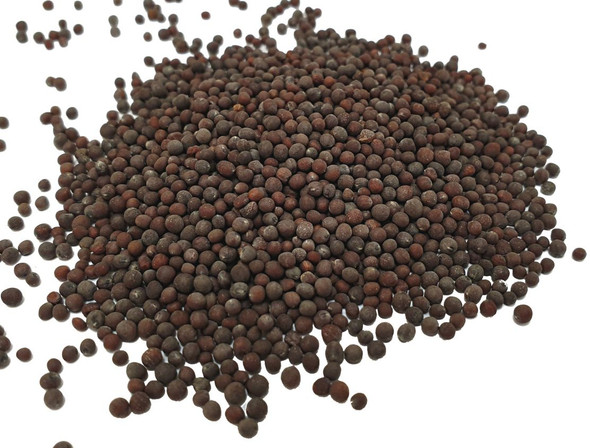
Description

Mustard is known all over the world, mustard is used all over the world
Cracking (crushing) and cooking with the cracked seeds produces a harsh hot mustard flavour, soaking the seeds in a sauce or paste prior to use will create a mellow mustard flavour
Grown in Canada
Packed in a unit that handles - MUSTARD - CELERY - SESAME
Nutritional Information per 100g
Calories 500
Fat 36g
of which saturates 2g
Polyunsaturated Fat 10g
Monosaturated Fat 22.5g
Carbs 28g
of Which Sugars 7g
Protein 26g
Sodium 13mg
Yellow Mustard Seeds - Quick Reference
What is it?: Yellow mustard seeds are the pale seeds of Sinapis alba, valued for their mild heat and clean mustard flavour.
Flavour: Mild, nutty and gently pungent, becoming sharper when crushed and mixed with liquid.
Common uses: Pickles, brines, chutneys, mustard making, curries, cabbage dishes, dressings and preserving.
Pairs well with: Vinegar, turmeric, dill, coriander seed, bay, garlic, cabbage, potatoes and pork.
How to use: Use whole for pickling and tempering, or crush before mixing with water, vinegar or wine to release more pungency.
Compare with: Milder and less forceful than black or brown mustard seeds, making it well suited to table mustards and delicate pickles.
Substitute: Brown mustard seeds can be used, but they will make the dish hotter and more assertive.
Storage: Store airtight in a cool, dry cupboard; whole seeds retain their character longer than ground mustard.
Good to know: The familiar mustard heat develops only after the seed is broken and moistened; dry whole seeds taste comparatively mild.
Customer Reviews
-
Delicious
Delicious
-
Delicious
Delicious
-
Always useful
Always useful to have these little fellows spitting in the pan